

Category: Articles
Tips on freefall safety, parachute flight, rigging, packing, and much more from the instructors, pilots, and riggers at Skydive Spaceland.
-
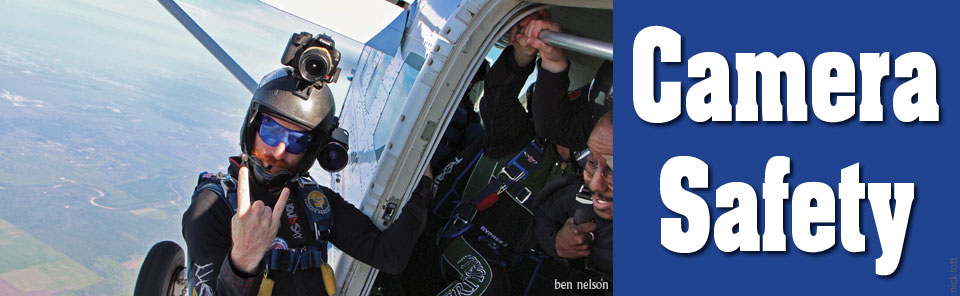
Skydive Spaceland Camera Policy
Forrest Gump might have said that skydiving and cameras go together like peas and carrots. It’s an awesome thing to capture what’s arguably the world’s most fun aerial activity with a nice tiny, high-quality camera such as a GoPro. It won’t get in the way, right? You won’t even know it’s there! To go back to our peas-and-carrots analogy, it doesn’t quite fit the skydiving scene in the sense that…
-
Which Way to Track? (Breakoff Series Part 4)
There’s a uniquely confusing time in a new skydiver’s life where they may not be at all sure which way to track at breakoff. This may not be due to them being stupid; it could actually be the result of being very WELL coached as a student. Imagine you are this new skydiver. You’re recently licensed, with all the performance objectives checked off on your proficiency card including tracking. Your…
-
Don’t Chop Your Fingers!
What’s most important, an on-heading opening or a fully open canopy? (Video follows article) Many manufacturing industries educate their employees about hand safety, especially when they have to work around heavy machinery. We don’t tend to talk about hand safety too much in skydiving, other than to recommend not wearing rings that can get hooked on things and to wear gloves when it’s really cold. Our focus on injury prevention…
-
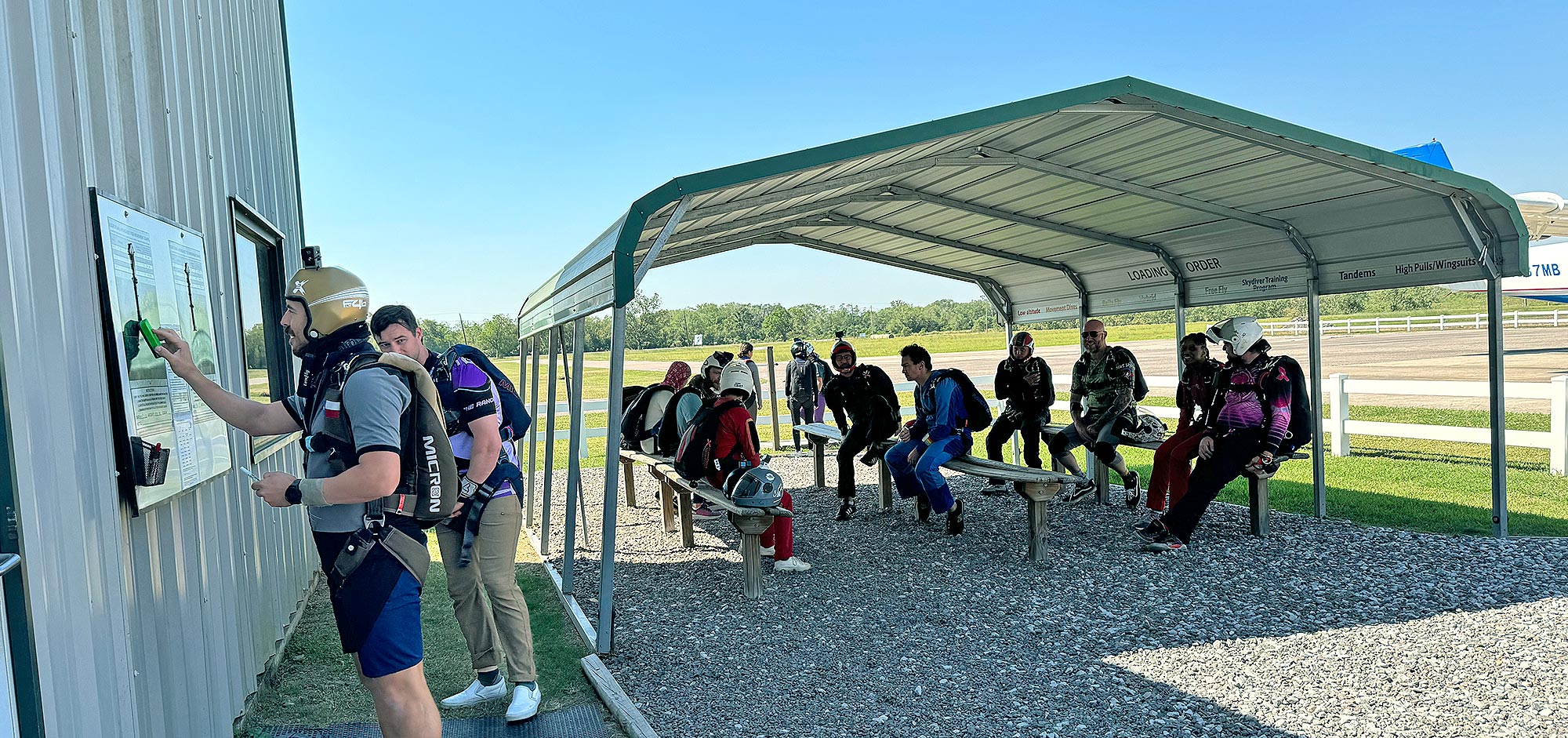
Don’t Be Late for Your Date!
We’re all adults here, and we all know that showing up late for a date can make you miss out on… well, whatever you had planned! 😳 Your date with the airplane for a skydive is no different, and few of us ever miss that! However, there are a LOT of skydivers who can be really, really bad about being late to our date with the loading area on the…
-
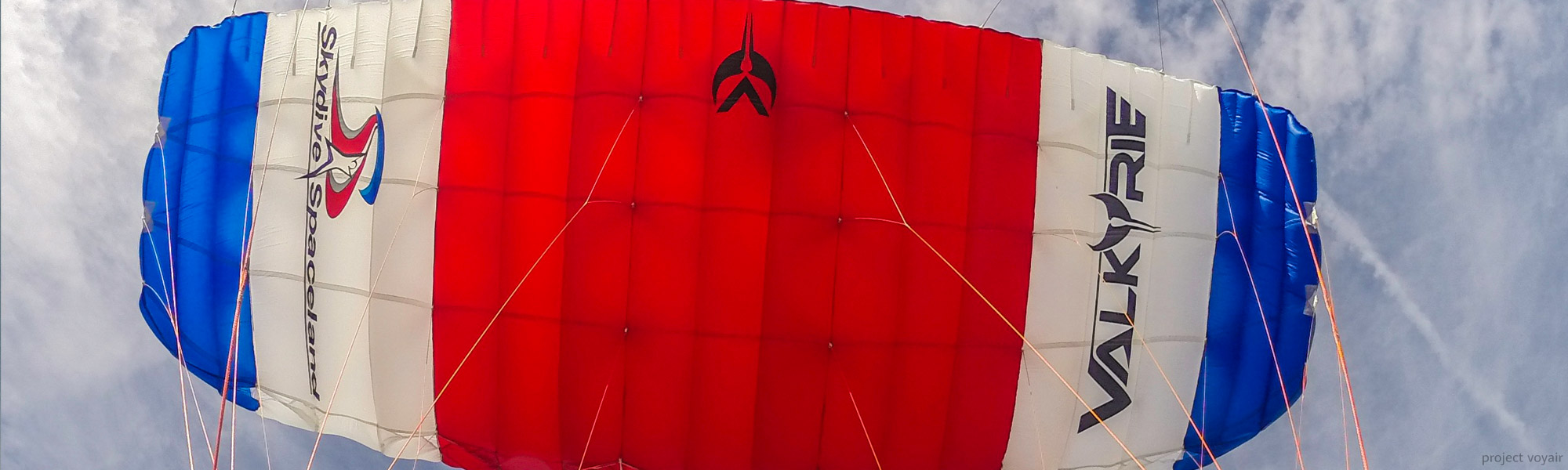
How to Pick Up Your Canopy
Hey, new skydiver! Do you feel confused when picking your gear up off the field? Do you constantly hear “YOU’RE DRAGGING!” being shouted from across the landing area? Do you want to look more like a PRO on your way in?! There’s a whole lot of information thrown at you as a new skydiver, and some of the finer details can slip through the cracks. Hopefully you get a laugh…
-
Parachute Landing Patterns Explained
Have you ever struggled to understand what a parachute landing pattern is and how to modify it for different wind conditions? Check out this video! (Another fantastic edit by Nick Lott!)
-
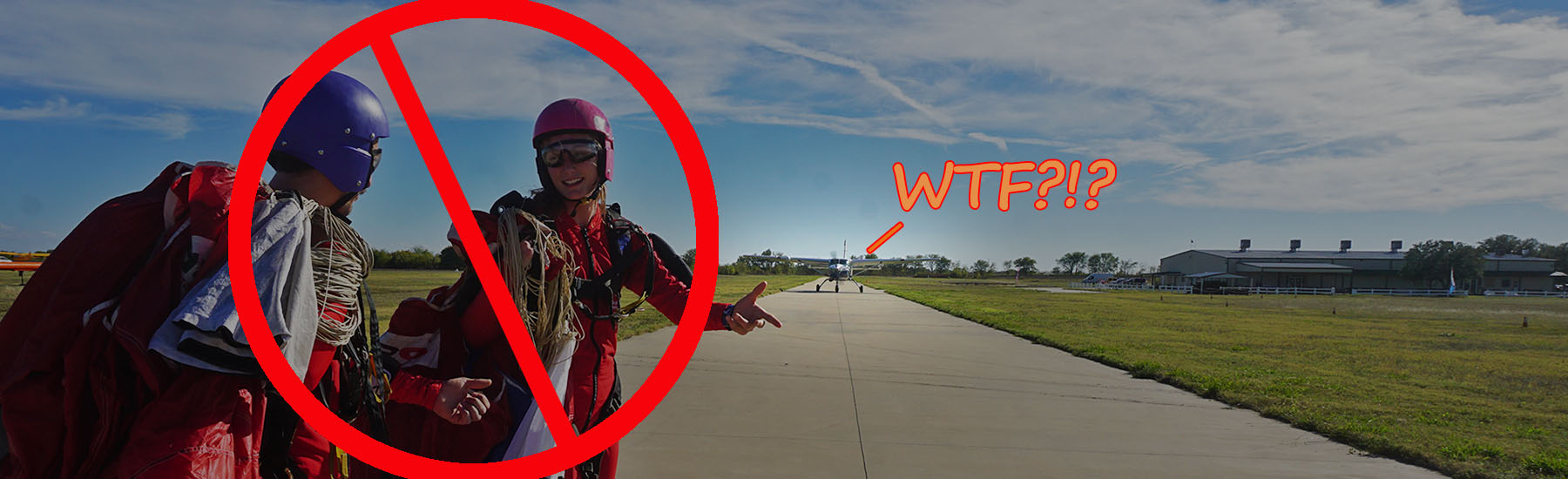
Look Both Ways Before Crossing the Runway
When we were kids, pretty much everyone who took care of us taught us to look both ways before crossing any street. Right? This was probably one of the rare pieces of advice most of us didn’t challenge too much, because no one wants to get hit by a car! Why, then, do we not apply the same logic to crossing the runway at an active airport, especially one as…
-
New Landing Hazard at Spaceland Dallas
UPDATE (10/10/22): We now have a secure gate on our side to access this area (in the southwest corner, the one closest to the hangar). It’s still not ideal to land here for sure, but we should be able to get you out without too much trouble. We would still recommend avoiding this area when possible. Please be advised that one of the fields just west of our D and…
-

Super Caravan Seating
TL:DR–Skip to the video! Airplanes are a lot like people–individual (sometimes ridiculously so) in their needs and tolerances. For example, you can safely get away with sitting far back in the cabin of the Super Otter, but not so much in the Super Caravan. This is the reason for a recent policy change in how we load the Super Caravan here at Spaceland (seating arrangement). Compared to the Otter, it’s…
-
It’s YOUR Job to Avoid Aircraft!
Remember the Smokey the Bear public information campaign with the slogan, “Only YOU can prevent forest fires?” The idea was to remind us that we all bear personal responsibility for avoiding this dangerous situation. (See what I did there? 🙂 ) Flying parachutes puts us in a similar situation that requires each of us to take personal responsibility for safety–for ourselves, other jumpers on the load, people on the ground,…
-
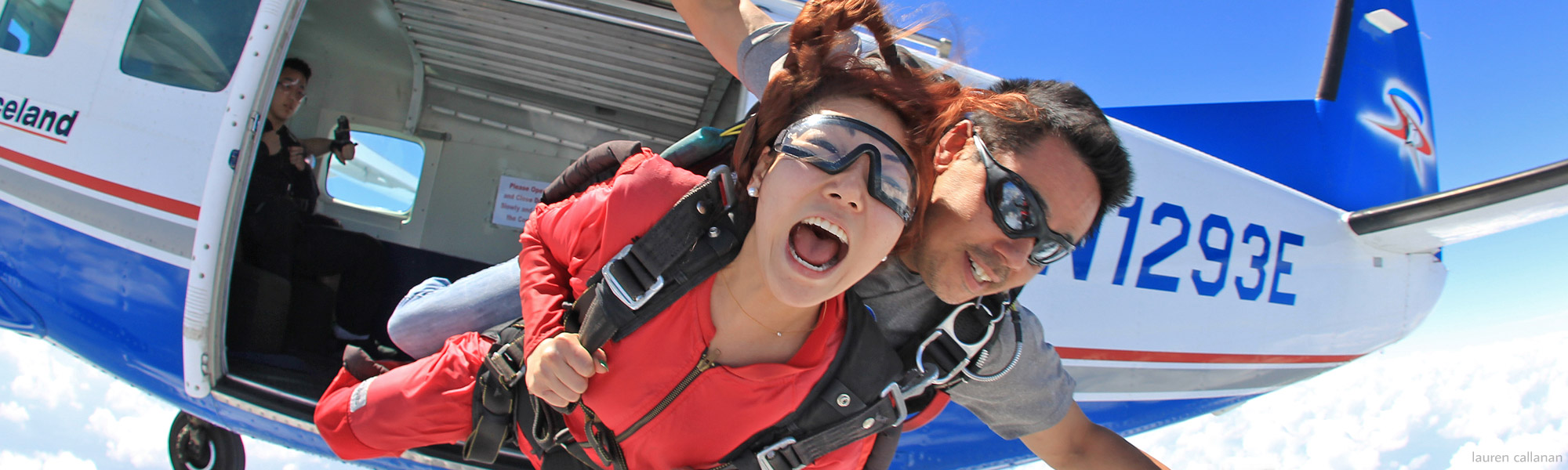
19 Things You Want to Know About Tandem Skydiving
You’re thinking about trying skydiving. Or maybe a friend/family member is. Or maybe you just need a few minutes’ break from work or your amazingly awful blind date, and this article sounded like the perfect activity to kill time while you’re hiding out in the bathroom. Let’s have some fun with this! These are the top questions we get asked all the time about skydiving, so we figure you have…
-
Manifest General Reminders
If you find yourself at the dropzone, you will most likely be spending some time in the manifest office. With the rapid rate of growth that Skydive Spaceland has been experiencing, we want to spread the word on some general reminders and guides for manifesting and sharing the space of the office. Manifest Basics What to start with: Number of slots you need The minimum call time you can make…
-
Turbulence and Skydiving: What You Don’t See Can Kill You
Air turbulence can partially or completely collapse a skydiver’s canopy, causing injury or worse. Avoid it at all costs!
-
Skydiving Airmanship Part 1: Knowledge
“Airmanship is the consistent use of good judgment and well-developed skills to accomplish flight objectives. This consistency is founded on a cornerstone of uncompromising flight discipline and is developed through systematic skill acquisition and proficiency. A high state of situational awareness completes the airmanship picture and is obtained through knowledge of one’s self, aircraft, environment, team and risk.” ‑‑http://www.skybrary.aero/index.php/Airmanship Airmanship is a trait that we as skydivers should aspire to master,…
-
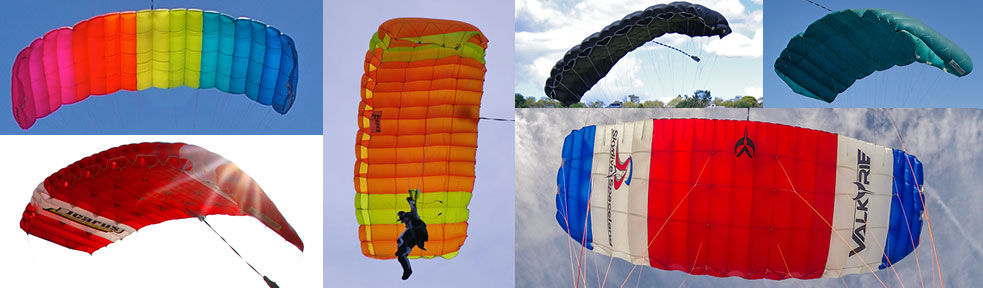
Good Canopies, Bad Decisions
So you are ready to get that shiny new wing, or sell your current canopy. Well caveat emptor[1], good readers. Are you making good decisions about this purchase, or the sale of your “old” wing? We are seeing a disturbing, fatal trend among skydivers worldwide as newer, faster wings come onto the market and older wings become perceived as less high-performance. To help combat this, we all need to examine…
-
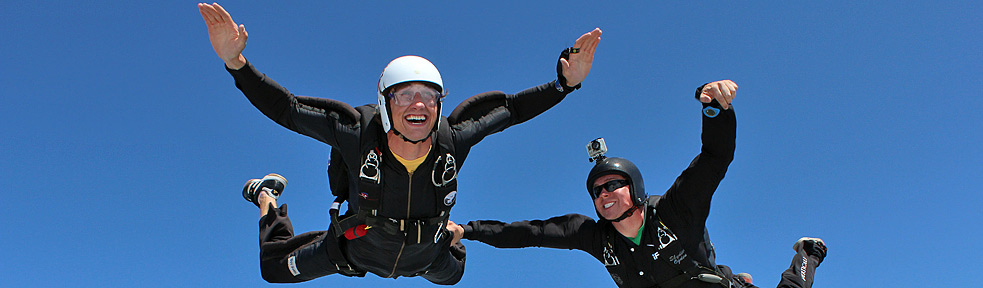
Weekdays Rock for Skydiver Training (STP)!
Weekends are definitely the most popular days for our Skydiver Training Program–of course, because that’s when most people are off work! However, as you might know we are open 7 days a week. If you have any availability to jump on weekdays, you might enjoy weekday skydiving training even more! Why? Overall slower pace of business gives you plenty of time to prep each dive thoroughly, with extra time if…
-
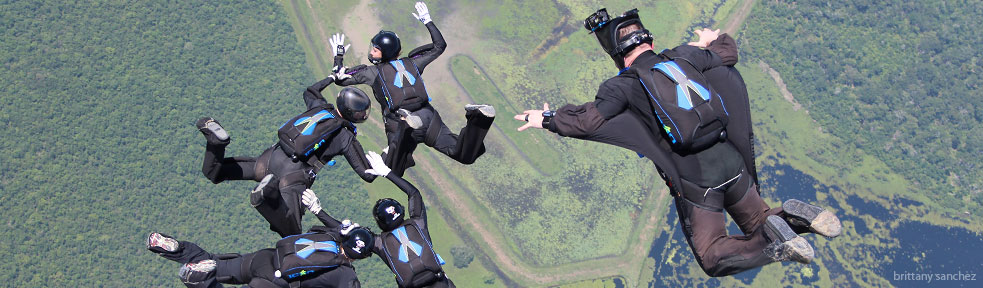
Breakoff Series Part 3: Video Takes the Center, High
It’s a super cool shot to get when you’re flying outside video above a skydiving formation–that shot when the outside camera flyer (who is filming the jump without being a part of the formation) drops into the center as the formation breaks away, probably turning in place to watch everyone track far and fast before deploying. It’s a great shot, that is, as long as everyone is really tracking far and…
-
Breakoff Series Part 2: Flat Tracking
Tracking away from other skydivers well is one of the most vital survival skills a skydiver can have. No matter what kind of freefall skydive you do, unless it’s a Mr. Bill or a solo, you will be tracking to achieve horizontal separation from the other people you are skydiving with before deploying your parachute. Failure to track well and straight can result in collisions with other skydivers as you…
-
Breakoff Safety Series
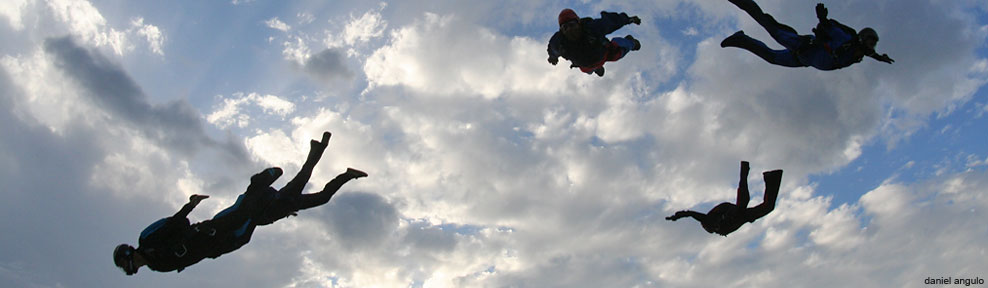
As skydivers who want to skydive again (and again, and again…), we tend to pay attention to the highest risk areas for our skydives to make them as safe as possible. We learn as students how to fly and land our parachutes safely, and we take canopy courses to get even better at it. We learn stable body positions for deployment, how to maneuver safely around other skydivers, how to…
-
Breakoff Series Part 1: Planning Breakoff and Tracking
Revised August 2015 Before you hop in the plane for your next jump, here’s some food for thought on safety: Plan your breakoff and tracking just as carefully as you plan the freefall part of your jump. This part of the jump is often neglected because it comes after “the good stuff,” but it is at least as important to your survival as your other freefall objectives, if not more…
-
Red Light, Green Light, No Light?
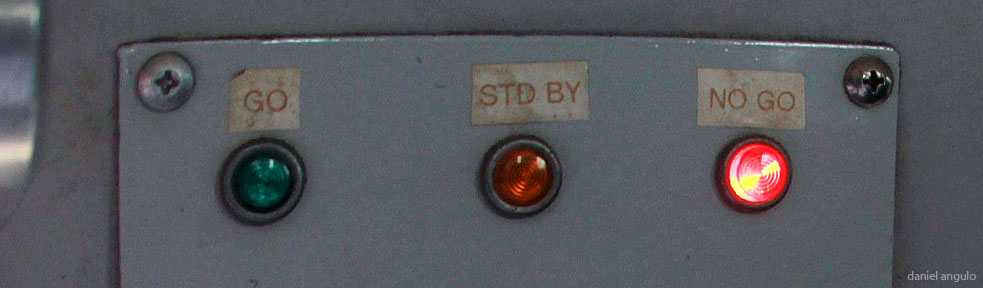
Quick! What do you do if you are on jump run, the green light has been turned on, and then the green light goes out (either the red light comes back on or the green light simply turns off)? Assume the light is broken and proceed with your climbout and skydive. Flip the spotting switch (if present) left and right quickly to let the pilot know the light is out,…
-

Skydiver Training Tip: That First Hop and Pop
Is it about time for your first hop and pop (low-altitude emergency exit simulation) in our Skydiver Training Program? If you’re like most skydiving students, chances are you are more nervous about this jump than most of your full-altitude skydives! The lower exit altitude combined with the 5-second maximum deployment time, and possibly your first time opening the aircraft door, seems like a very tall order when you try it…
-
Skydiver Training Tip: Finding Your Match
When you get ready to skydive for the first time, you put the ultimate trust in your instructor. You trust that person to gear you up, give you the freefalling time of your life, and deliver you softly back to the real world on the ground. The relationship between first-time student and instructor is an intense one, albeit often short-lived for those who choose to make only one jump. When…
-
Canopy Traffic: Find Your Place in the Sky
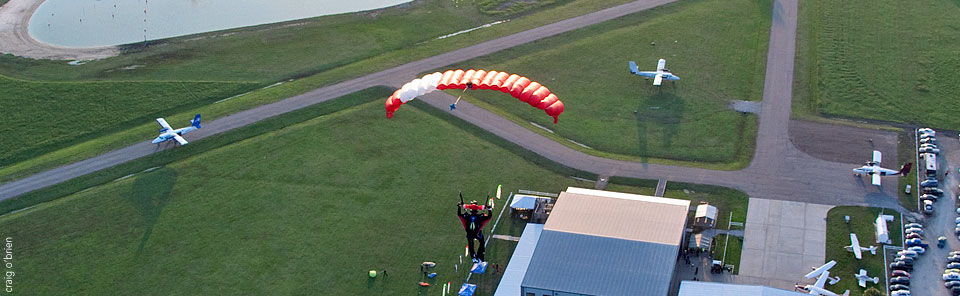
Traffic is a bad word, especially for those of us living in the Houston area! And while we think we can get away from it when we’re flying, the reality is that at any dropzone, and particularly at a busy one like Spaceland, the traffic can resemble downtown Houston rush at its worst. The difference is that if we don’t like what’s ahead of us, we can’t just stop and…
-
Skydiving? Take Your Phone!
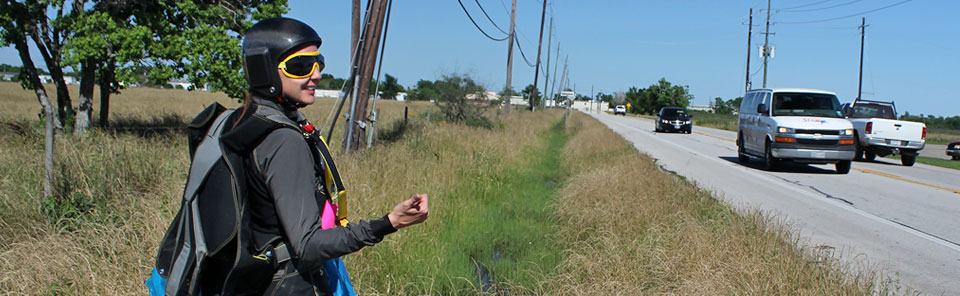
These days, most of us are almost never without our mobile phones. Some even seem to have separation anxiety if they misplace their phones for even a few minutes! 🙂 This week’s tip is good news for the phone-bonded among us, because it’s a recommendation to take your phone with you whenever you skydive. Why, you might ask? Do I really need to get that last selfie on the plane…
-
Altitude Awareness: Do You Have It?
What’s the first thing your skydiving instructor has you do after you leave the plane? Check your altitude. Before and after maneuvers, check your altitude. If you don’t have altitude awareness, PULL! Awareness of your altitude is of paramount importance to our survival in skydiving, and we all know it. And yet we sometimes forget about altitude awareness as we progress as skydivers. We start working on more advanced skills…
-
What’s Your Wind Limit?
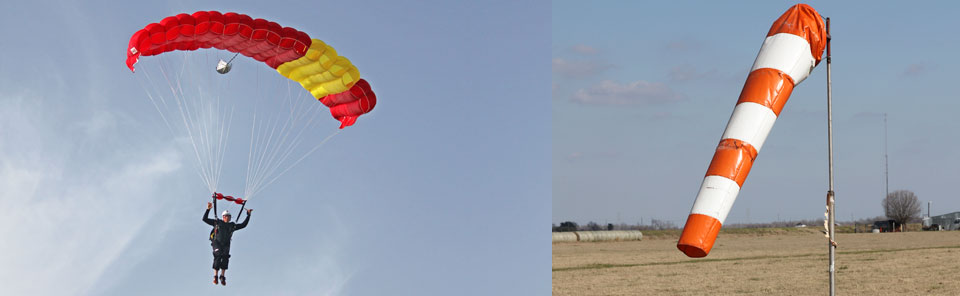
Gusty winds are common at Spaceland and many other dropzones. As an experienced jumper, I have thought a lot about what my personal wind limit is–in other words, when I will sit down even though the dropzone is not on a wind hold. Recently, I made the decision not to jump after watching other fun jumpers and tandems land. Later in the day, the tandems went on a wind hold.…
-

Splish-Splash: Landing in Wet Conditions
Ah spring… Green grass, warming temperatures, and RAIN! One of the most common questions we see in our social media news feeds this time of the year is, “How wet is the landing area?” If you have to ask, the answer is usually “underwater.” 😉 Since we’re not too interested in waiting days for perfectly dry ground to skydive, that means we have at least a fair chance of landing…
-
Emergency Exit!
Current weather reports 1000 foot overcast skies… anyone for a hop & pop? In all seriousness, how low are you prepared to get out of the airplane? Have you thought about what you would do in an emergency since you were a student? A couple weeks ago I was flying, had just taken off from Spaceland in the SuperVan with a load of jumpers, and after waiting for a lull…
-
Keep Learning with Facebook!
As a current or former student in our Skydiver Training Program here at Spaceland, you have access to our skydiving students group on Facebook. This group is a ton of fun! You’ll find everything from freefall and canopy control questions to gear inquiries, discussions of who’s jumping on a particular day, Spaceland event announcements, and what crazy exit people want to try on their post-graduate dives. We keep this group…